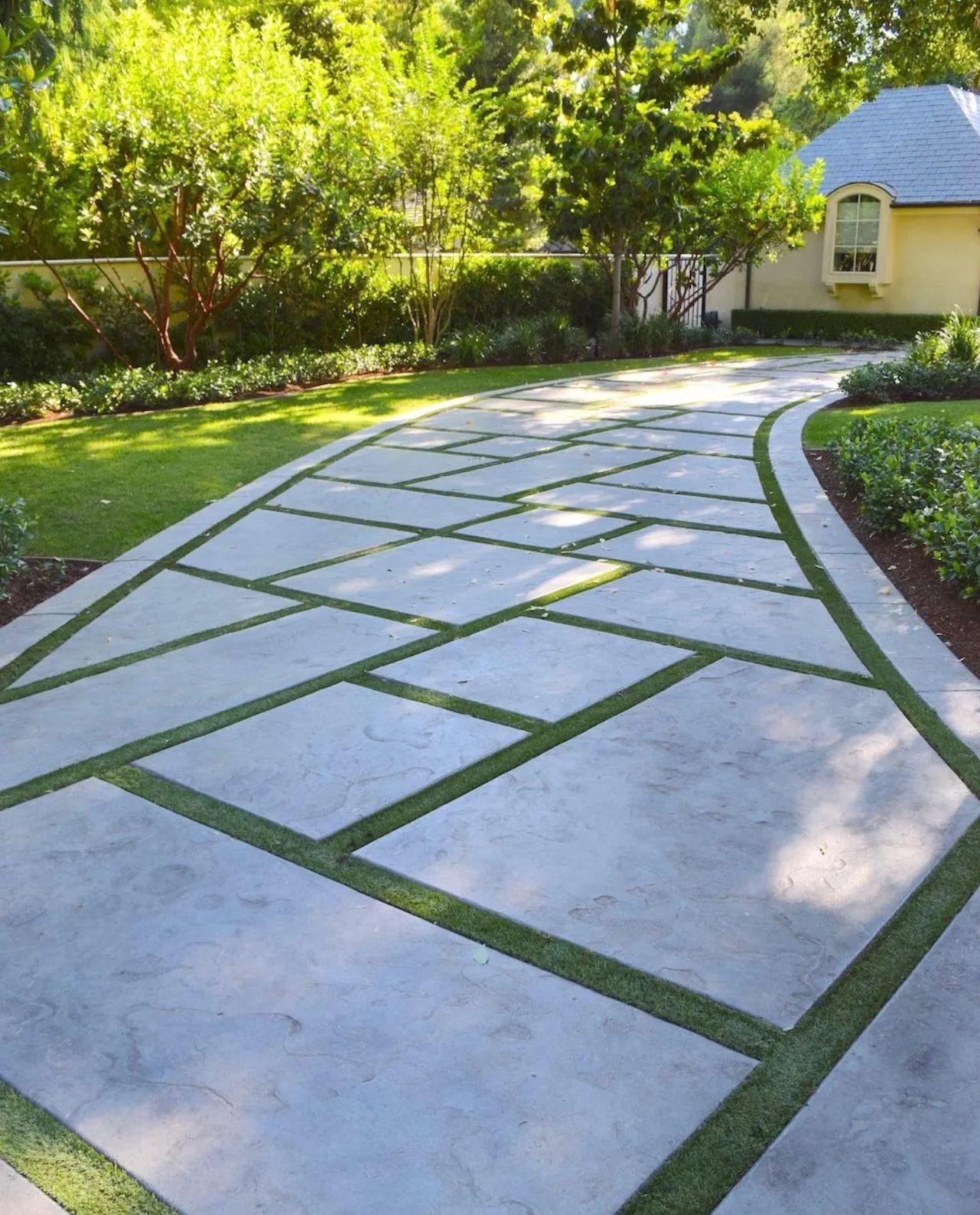

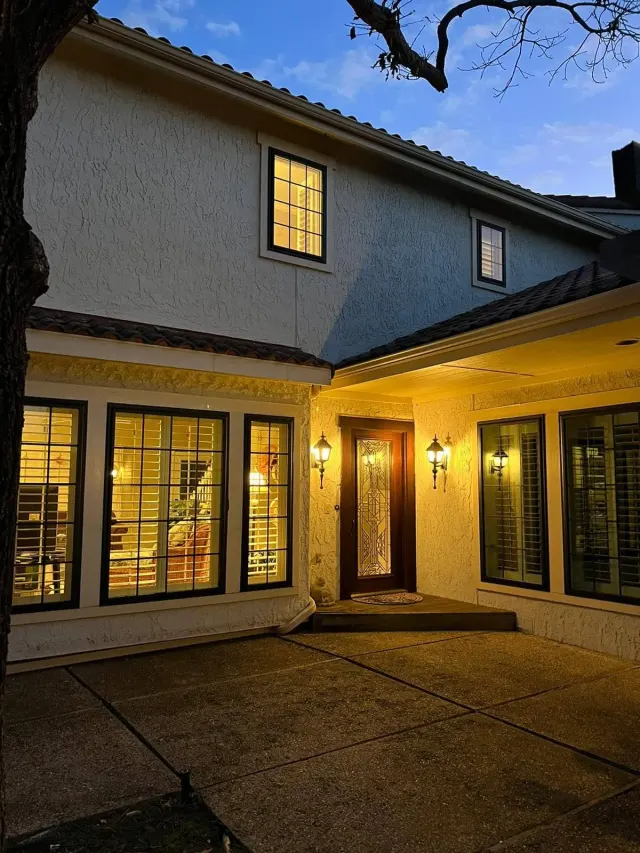
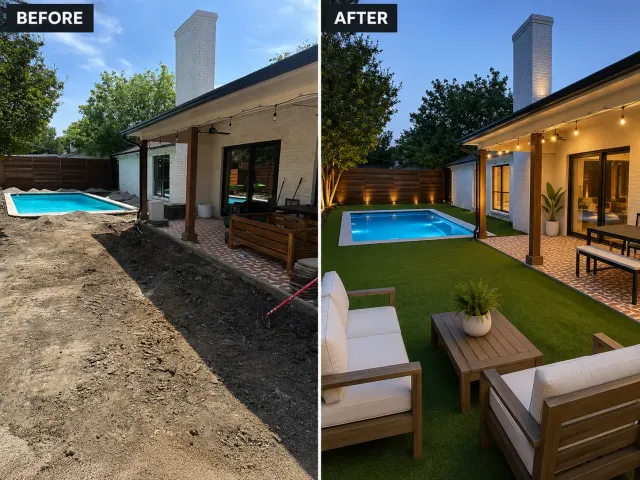
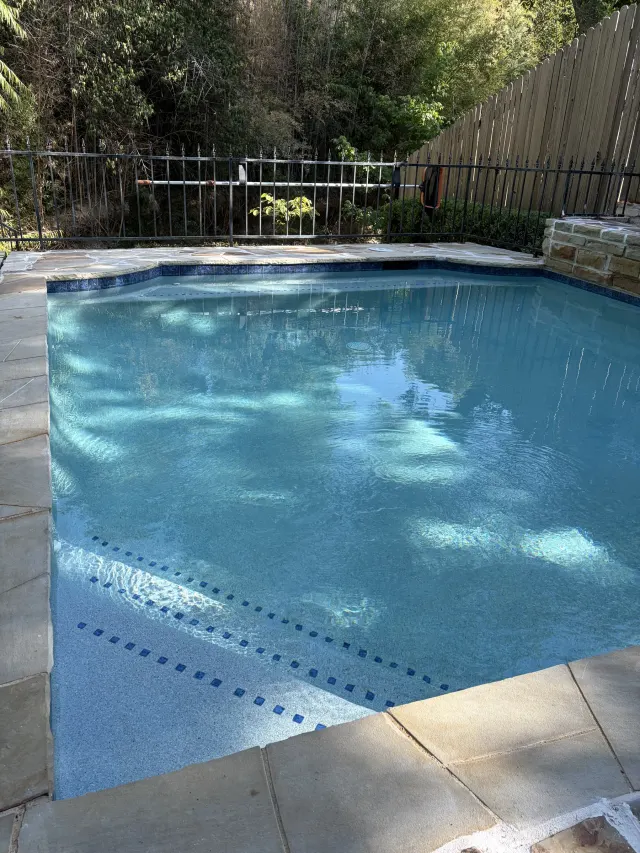
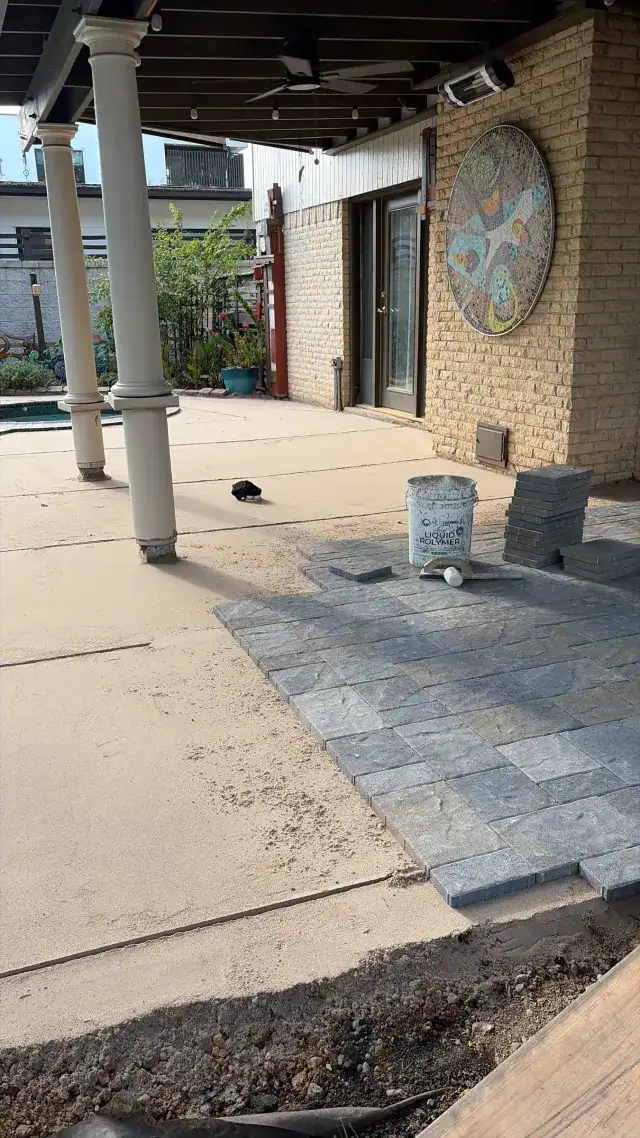
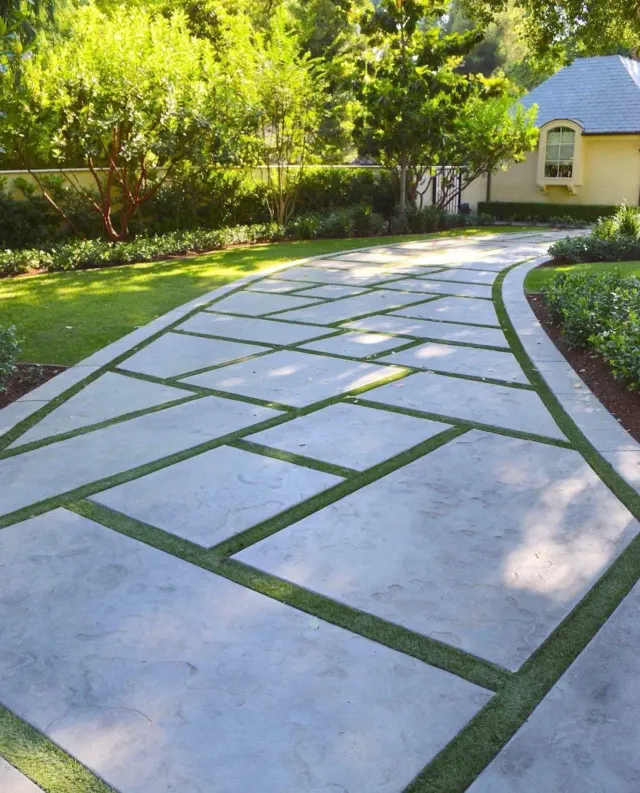

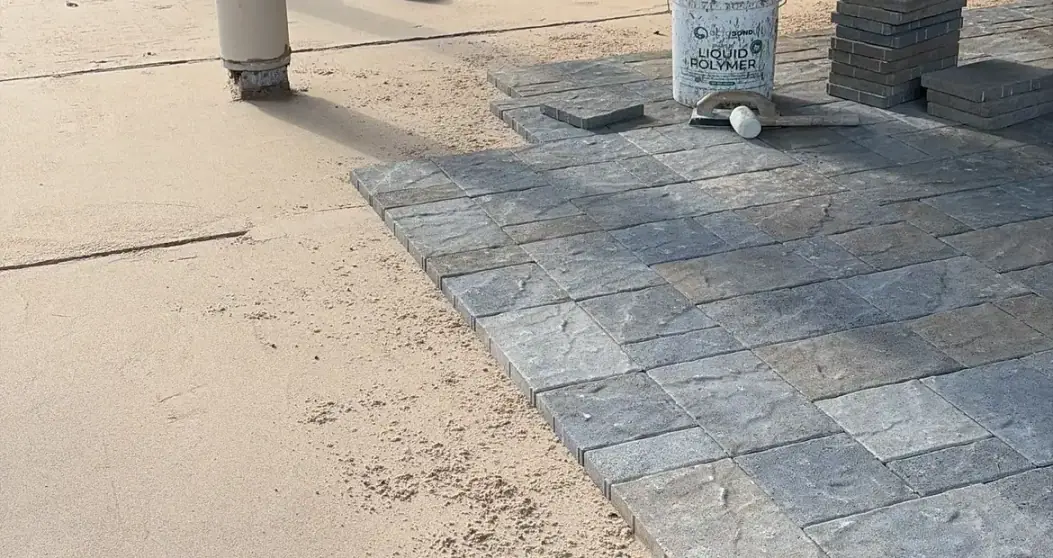
NRG Remodeling offers residential paver patio installation in Dallas, Arlington, Grapevine and nearby Dallas-Fort Worth towns, including pavers laid over an existing concrete slab, such as the floor of a covered back porch. The first step is a no-obligation design consultation and estimate.
For a paver driveway, see our driveway contractor in Dallas page.
To talk first, use the call button or phone number at the top of this page.
Selected patio and paver projects
What a paver patio costs in Dallas
Published Dallas-area and Texas figures put installed paver patios at a starting point of about $11 per square foot in 2026. That is the market's figure, not an NRG Remodeling price. At that rate, a 20 by 20 foot patio (400 square feet) starts from about $4,400.
What moves the price of your patio:
- Its size and shape
- What has to come out first: grass, soil or an old slab
- How much grading, base and drainage work the ground needs
- The paver, color and pattern you choose
Your price comes from the no-obligation design consultation and estimate for your yard. Financing available through our partners.
What goes under a patio built on the ground
For a patio laid on dug-out ground rather than over a slab, Western Interlock, a paver manufacturer, names the site-prep mistakes it sees most and how to avoid each:
| Mistake | What goes wrong | How to avoid it |
|---|---|---|
| Little or no gravel | Sand laid straight on dirt leaves nothing to carry the weight, so the pavers shift | Enough gravel under the pavers |
| Loose gravel | The base settles and the pavers go uneven | Compact it as tightly as possible |
| No slope | Water puddles and washes out the sand under the pavers and in the joints | A slight slope, around 2%, unless the pavers are permeable |
| Edge restraint on the bedding | The restraint shifts away and the pavers move with it | Scrape the bedding away and nail the restraint directly to the ground |
| Pattern | Long lines of pavers running the same way as car traffic are likely to shift | Matters mainly under vehicles; on a patio the pattern is not as important |
Built that way, the finished patio has compacted gravel at the bottom, a sand bedding on it, the pavers on top and sand filling the joints.
Can pavers go over an existing concrete patio?
Yes, when the slab is sound and water neither pools on it nor runs toward the house. In its guide to laying pavers over concrete, Belgard, a paver brand, accepts cracks in a slab that has not shifted or heaved, has you wet the slab first to see whether water pools, and wants water kept from pooling or flowing toward the home before the pavers go down. Before you choose this route, run your own slab through these checks:
| Check | Ready for pavers | Sort out first |
|---|---|---|
| Condition | Cracked in places, but nothing has lifted or moved | Sections that have heaved or shifted; when most of the slab is sound, Belgard says such a section can sometimes be cut out and replaced |
| Water | Wet the slab: the water runs off away from the house, with no puddles | Puddles, or water running toward the house: fix the drainage first, for example with a low drainage edge or a French drain |
| Height | Enough room below each doorsill for the pavers and their setting bed | Too little room under a doorsill, or a door that opens outward onto the patio and would no longer clear the new surface |
| Edges | Border pavers bonded to the concrete | A loose outer row that can creep off the slab |
The outward-opening door check comes from Island Block & Masonry Supply, a masonry supply company, which also has the outer row glued down; the other checks, the doorsill height included, are Belgard's.
Pavers or a poured concrete patio?
The Concrete Masonry & Hardscapes Association (CMHA), the concrete paver and masonry industry's association formed by ICPI and NCMA, says concrete pavers are made with two to three times the strength of typical poured concrete and begin curing in a climate-controlled factory. It compares the two like this:
| Pavers | Poured concrete | |
|---|---|---|
| Cracking and ground movement | Neighboring pavers share the load and adapt to shifts in the ground | Cracking is "practically inevitable" |
| Repairs | The affected pavers come up, the bedding or base is adjusted and the pavers go back | Damaged sections are cut out, new concrete is poured and left days to cure, often leaving visible patches |
| Upkeep | Cleaning the surface, sweeping in sand, removing weeds | Easy at first; over time cracks, spalled surfaces and general wear take more effort |
| Upfront cost | Often higher | Often lower |
A sealer is optional on either surface; if you use one, it needs upkeep every few years. CMHA speaks for the paver side, and its own conclusion is that the right material is the one that fits your goals, setting and expectations for how long it lasts, upkeep and looks.
What homeowners said about their patios
Read the full review →“NRG Remodeling did a great job on extending my patio and adding an overlay, as well as a concrete pad for my shed.”
Read the full review →“Amazing new patio! From Val, the sales representative to the follow up team..simply impressed Had a problem with a sprinkler damaged durinf construction...”
Read the full review →“NRG transformed our backyard with a beautiful patio and landscaping. It's like having an extra room for entertaining.”
Read the full review →“five out of five starts for the great and fast work they did . we love how our backyard patios and landscape came out”
Plan your patio with NRG Remodeling
Book your no-obligation design consultation and estimate through our contact page, or use the call button or phone number at the top of this page. For the rest of the yard, see our landscaping services, artificial turf installation and all our services.