



For a hail damage roof insurance claim in Texas, start by photographing the damage and covering any opening. Then file the claim with your insurance company as soon as you can, as the Texas Department of Insurance (TDI) advises, and get a roofer's inspection and written estimate alongside it, before the adjuster visits.
The claim stays between you and your insurance company, because Texas law bars the contractor working on your roof from acting as your adjuster. A roofer's part is the roof: NRG Remodeling does a free inspection with a photo report and, if the roof needs it, the repair or replacement (see our roofing Dallas page).
Insurance company or roofer first? The order that protects your claim
Protect and photograph the roof first, then file the claim with your insurance company as soon as you can: TDI's first step for getting a claim paid is "File a claim as soon as you can." A roofer's inspection runs alongside the claim, so you have a written estimate before the adjuster visits. TDI's advice to get repair estimates before you file matters most when the damage may cost about the same as your deductible or less.
- Stop more damage and keep the receipts. Cover holes and broken windows to keep rain out, and remove standing water. Your policy may pay for these temporary repairs, so save every receipt. Hold off on permanent repairs: TDI warns that an insurer might deny a claim if you make them before it sees the damage. In Dallas, a tarp needs no permit.
- Document before anything is moved. Take photos and video of the damage, inside and outside, and write a list of it. Don't throw damaged items away until your insurance company tells you to.
- Read your declarations page. It is the first page of your policy and lists your coverages, limits and deductibles. Look for three things: whether the roof is covered at replacement cost or actual cash value, whether wind and hail carry a deductible of their own, and the policy's deadline for reporting a claim.
- File the claim as soon as you can. Call your company, file online or use its app. Keep a list of everyone you talk to there. TDI says your company can't charge you more for calling to ask about your policy or how to file. If the damage looks small, TDI suggests knowing your deductible and getting repair estimates before you file: if the repair costs about the same as the deductible or less, you may decide a claim isn't worth it.
- Get the roof inspected alongside the claim. Book a roofer's inspection and written estimate while the claim is open, so you know what the roof needs before the adjuster visits.
- Be there for the adjuster. Being home for the visit lets you make sure the adjuster sees everything. Write down the adjuster's name, phone number and email.
- Compare estimates. Get bids from more than one contractor and show them the insurance company's estimate. If a contractor finds damage the adjuster didn't, talk to your insurance company about the difference.
How to tell if hail damaged your roof
Start with what you can check without climbing onto the roof:
- Round dents in gutters, downspouts, metal vent caps and flashing
- Shingle granules piled up where the downspouts empty
- Torn window screens, cracked glass or chipped paint on the side the storm came from
- Fresh stains on a ceiling, or wet insulation in the attic
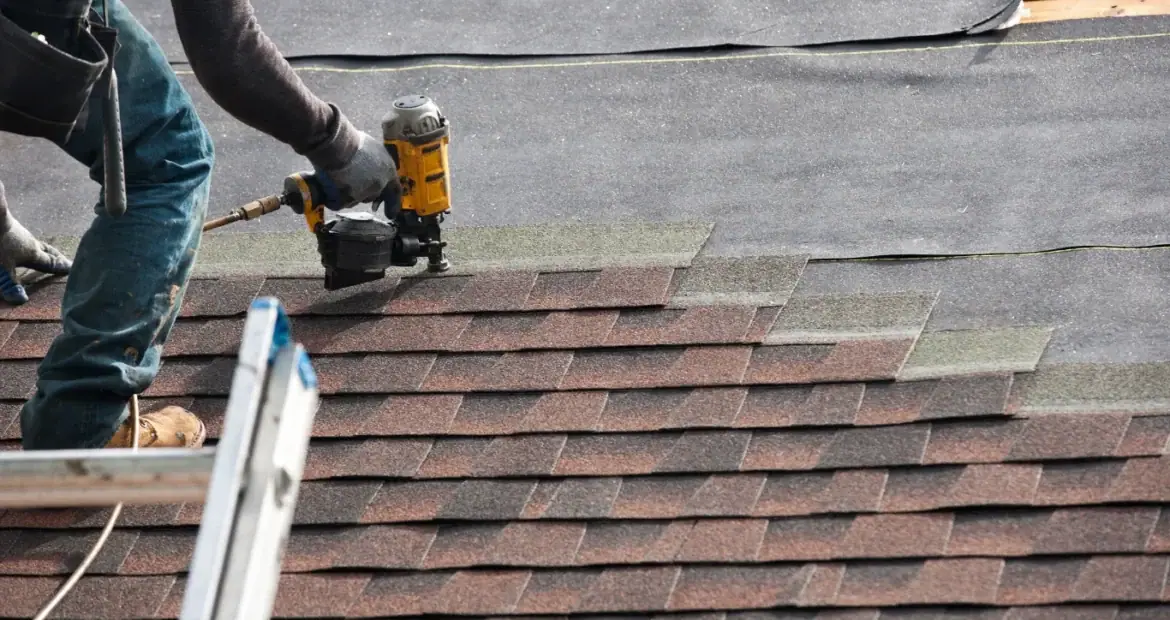
Any one of these is a reason to have the roof itself looked at (our guide to common roofing issues explains what a small leak can do over time). On an NRG Remodeling storm damage roof repair visit, the inspection checks for leaks and damage, how much life the roof has left, drainage, venting and code compliance, and the photo report marks each problem it finds.
Will insurance cover a 10 year old roof?
If your home policy includes wind and hail coverage, TDI says your insurance company should pay for hail damage; on an older roof, the age mostly changes how much you are paid, through the type of coverage you have. What insurers won't do is pay for a new roof just because the old one is old or worn out.
Two things can change the answer before a storm ever hits. As roofs age, some companies switch roof coverage to actual cash value at renewal, and a roof in poor condition may not be covered at all; your company should tell you when it changes your coverage, so read your latest renewal papers. And on the Texas coast, a home policy might not cover wind and hail, and coastal owners buy that coverage separately.
Replacement cost or actual cash value: TDI's roof example
Replacement cost coverage pays to replace the roof at today's prices, whatever its age. Actual cash value coverage pays that cost minus depreciation for wear and age, so an older roof gets less. TDI shows the difference on a house insured for $200,000 with a 2% ($4,000) deductible and a storm-damaged roof that costs $10,000 to replace:
| Roof age | Replacement cost policy pays | Actual cash value of the roof | Actual cash value policy pays |
|---|---|---|---|
| 5 years | $6,000 | $8,500 | $4,500 |
| 10 years | $6,000 | $7,000 | $3,000 |
| 20 years | $6,000 | $4,000 | $0 |
On the 10-year-old roof in that example, actual cash value coverage leaves you paying $7,000 of the $10,000 roof, against $4,000 with replacement cost.
A percentage deductible can cancel out a smaller claim
A deductible may be a flat amount or a percentage of what the home is insured for, and your wind and hail deductible may be different from the one for other damage. In TDI's example, a home insured for $150,000 with a 5% deductible carries a $7,500 deductible, so a $6,500 roof repair pays nothing; with a $500 deductible, the same repair pays $6,000. The deductible applies to each claim, not once a year.
How the money arrives
With replacement cost coverage, most companies pay in two checks: the first, after the adjuster has seen the damage, for the estimated repair cost minus depreciation and your deductible, and the rest, the depreciation held back, once you've started or finished the repairs. Ask your agent or adjuster when that second check is released and how long you have to finish the work.
Texas law lets the company hold that second payment until you give reasonable proof that you paid your deductible: a canceled check, money order receipt, credit card statement, or a signed installment or financing contract that requires full payment of the deductible over time (Insurance Code 707.004). If you owe money on the house, the repair check is made out to you and your mortgage company, which usually releases the money as the work is done.
Can a roofer pay or waive my insurance deductible in Texas?
No. Texas law requires you to pay your own deductible (Insurance Code 707.002), and on a job paid with insurance claim money, a contractor commits a crime by advertising, promising or actually doing any of these without your insurance company's consent: paying, waiving or absorbing your deductible, giving a rebate or credit that offsets it, or helping you avoid paying it in any other way (Business and Commerce Code 27.02). It is a Class B misdemeanor, which TDI puts at up to a $2,000 fine and up to six months in jail.
The offer usually comes disguised. TDI names the common forms: an estimate higher than the real cost of the repair, so the extra insurance money covers the deductible; a rebate or credit for the deductible amount; or an offer to "work it into the bid." Each one sends your insurer false numbers, which TDI calls fraud, and a contractor who absorbs your deductible is likely making up the difference with shortcuts or cheaper materials.
Two more rules sit in the paperwork. A contract of $1,000 or more that is reasonably expected to be paid wholly or partly from an insurance claim must carry the state's deductible notice in at least 12-point bold type. And your insurance company can ask you to prove you paid the deductible. If a contractor makes the offer, TDI's advice is to hire someone else, tell your insurance company, and report it to the Texas Attorney General's Consumer Protection Hotline (TDI's deductible page explains how).
Warning signs after a storm
- A knock on the door right after the storm. TDI warns that out-of-town scammers may be the first to arrive. Check that a company has a local address and phone number.
- A waiver or form to sign before anyone inspects the roof or gives you an estimate. It may be a contract that binds you to a bill you never saw. Read anything before you sign it, and get the estimate first.
- Blank spaces, or the line "Homeowner agrees to the listed repairs for the value of insurance proceeds." That wording hands the contractor your whole insurance payment. A good contract lists the materials.
- A large or full payment up front. Never pay the whole bill before the work, TDI advises. A stricter rule applies only when the damage comes from a natural disaster that led to a disaster declaration by the governor or a county judge (many hail storms get none): then a contractor repairing that damage who has not kept a physical business address in your county or a neighboring county for at least a year before the contract may not require any payment before work starts, and partial payments may not run ahead of the work done and materials delivered (Business and Commerce Code chapter 58).
- A single bid. Get written bids from more than one company, on letterhead with the company's name, address and phone number, and be careful with one far lower than the rest.
Before you sign, check references and complaints (TDI suggests the Better Business Bureau), ask for the contractor's certificate of insurance and bond and call the companies listed to verify them, and pay by check or credit card. That payment record is also the proof your insurance company may ask for that you paid the deductible.
How long your insurance company has to answer a claim
Texas sets the clock in Insurance Code chapter 542, and each step starts from a different event:
| What the company must do | Deadline | The clock starts |
|---|---|---|
| Acknowledge the claim, start investigating and ask for what it needs from you | 15 days | When it receives notice of your claim |
| Accept or reject the claim in writing, with the reasons if it rejects | 15 business days | When it has every item, statement and form it asked for |
| Decide, if it needs more time | 45 days | When it tells you why it needs more time, which it must do within those 15 business days |
| Pay what it agreed to pay | 5 business days | When it tells you it will pay, or when you complete something the payment depends on |
After a weather-related catastrophe or major natural disaster, as the Texas insurance commissioner defines it, each of these deadlines is extended by 15 days (Insurance Code 542.059). Your own deadline to report the damage is in your policy: TDI says most companies set one, and some policies allow one year unless you can show good cause for the delay.
When the adjuster's estimate is lower than your roofer's
Put the insurance company's estimate next to your contractors' written estimates. Where a contractor found damage the adjuster did not, call your insurance company or agent, explain the difference and send documentation that backs it up, such as the inspection photos.
If talking it through doesn't settle it, TDI lists two more options. You can ask for an appraisal, which is for disputes about the amount of the claim, not about whether the policy covers the loss: you and the company each hire an appraiser, the two choose an umpire, and the umpire's decision binds both sides; you pay your appraiser and half of the umpire's expenses. Or you can file a written complaint with TDI through its online complaint portal.
If you want someone to negotiate the claim for you, that is a public insurance adjuster's job. Public adjusters work for you, not the insurance company, charge a fee, and must hold a TDI license, which you can check with TDI's license lookup. They can't take part in repairing your property.
The line runs the other way too: Texas law bars a contractor that is working, or may work, on your property from acting as your public adjuster or advertising to adjust your claim, even if it holds an adjuster license or a power of attorney (Insurance Code 4102.163). A roofer can inspect, photograph and quote; the claim decisions stay with you and your insurance company.
Which storm repairs need a permit in Dallas?
In Dallas, a storm repair needs a permit once it goes past temporary protection and minor fixes: shingle and roof deck repairs, re-roofing and framing repairs do; tarps and minor roof or vent repairs don't. The City of Dallas sorts storm repairs like this:
- Tarps and other temporary protection from more water damage: no permit.
- Minor repairs to roofing or roof vents: no permit.
- Repairing or replacing damaged siding, sheetrock or windows: typically no permit.
- Damage to the shingles and roof deck only: a roofing permit, issued over the counter at a City building inspection office or online.
- Replacing large areas of the roof, or the whole roof: a re-roof permit.
- Damage to roof joists, rafters or wall framing: a building permit, applied for at the Oak Cliff Municipal Center or online.
The City's building inspection FAQ exempts re-roofing a single-family home or duplex only when the work is worth $500 or less. That exemption may not apply in certain areas, such as historic, conservation and planned development districts, which have additional requirements, so check with the City first. Work done without a required permit carries a City investigation fee of $100 per hour per trade (fee schedule effective July 1, 2025).
These are the City of Dallas's storm repair rules; in Arlington, Grapevine or another city, check that city's own permit rules. For permits on other Dallas home projects, see Dallas home permits and who pulls the permit on our home page.

More questions about hail claims
Will my premium go up if I file a hail claim?
TDI says Texas home insurers can't charge you more for a claim for weather damage such as hail, for a claim they didn't pay, or for calling to ask about your policy or how to file. The claim does appear on your CLUE claims history report, which most insurers read when deciding whether to sell you a policy, so ask your agent how it affects any claim-free discount you have.
Does insurance pay for a place to stay during roof repairs?
It can: TDI says most policies cover some related costs if you can't stay in your house after a storm, so ask about additional living expenses and keep every receipt. That coverage may be limited to 10 to 20% of your dwelling coverage, so watch what you spend.
Getting your roof checked after hail
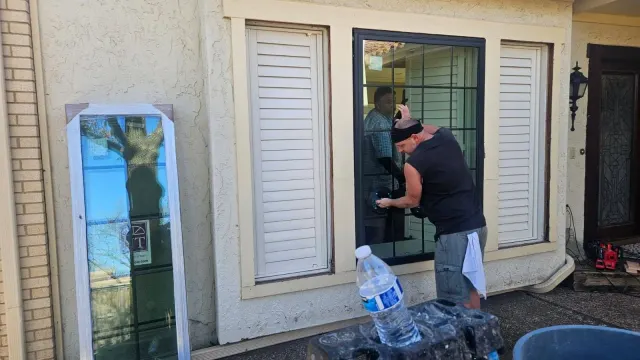
NRG Remodeling inspects storm-damaged roofs in Dallas, Arlington, Grapevine and nearby Dallas-Fort Worth towns across Dallas and Tarrant counties. The inspection and quote are free, and the photo report and the quote are yours to use as you decide. If water is coming in, ask for emergency roof tarping first. If the hail also broke windows, NRG also installs replacement windows.
A selection of what homeowners wrote about NRG's roof work on Google:
Cara B.
★★★★★
"We used NRG for a new roof and turf install and are very happy. Project Managers Eddie and David were very knowledgeable and explained everything."
New roof · Google review
Isaac J.
★★★★★
"Quick and efficient roof repair by NRG. They identified the problem and fixed it promptly. No more leaks!"
Roof repair · Google review