


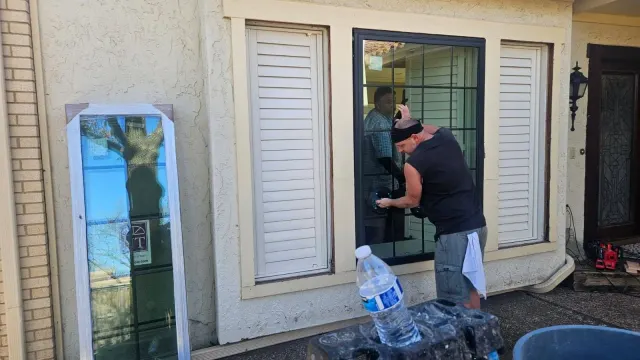

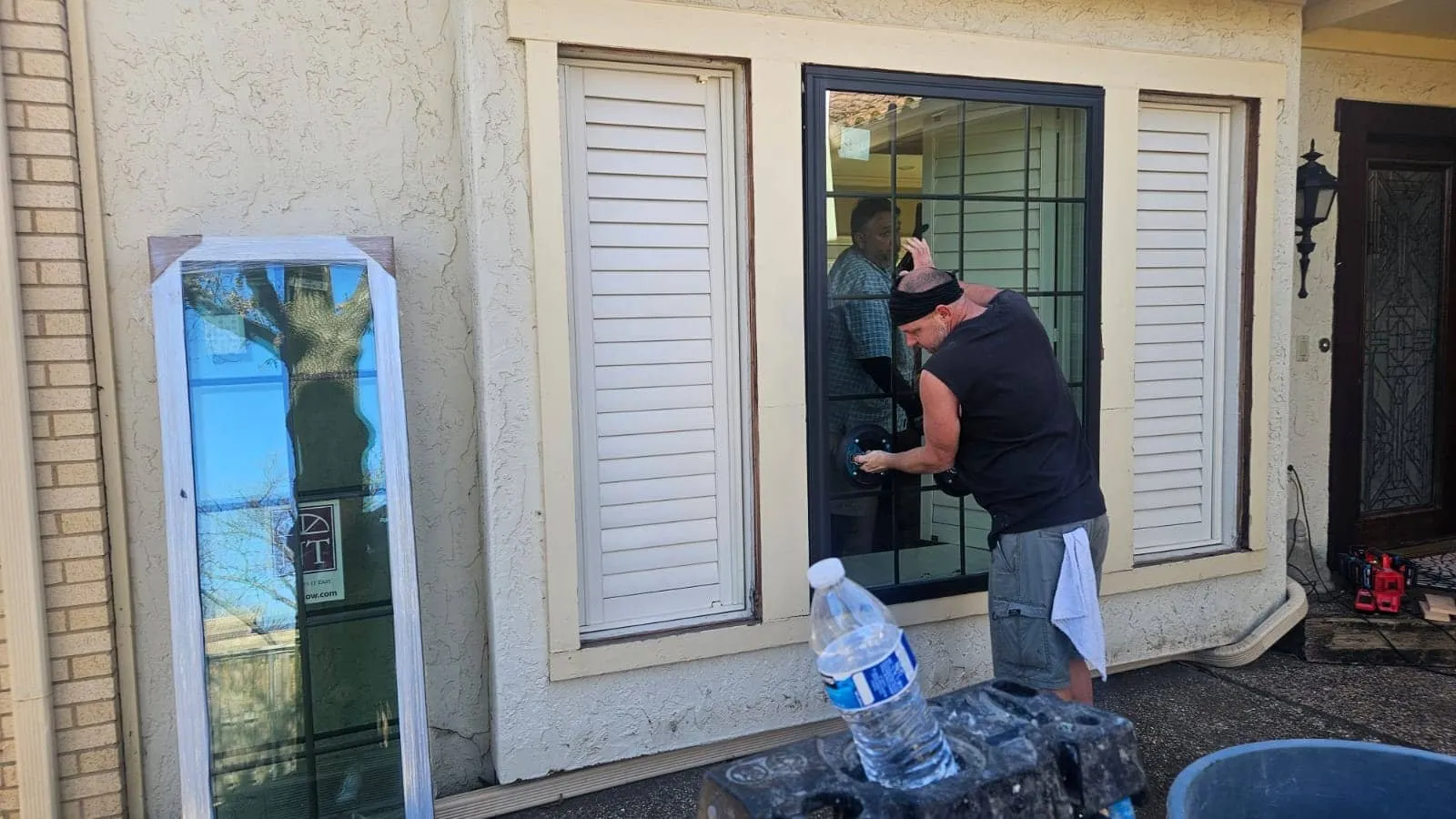
For replacement windows in North Texas, the U-factor and SHGC to look for are an SHGC (solar heat gain coefficient) no higher than 0.23 and a U-factor no higher than 0.28, both printed on the window's NFRC label. That pair meets ENERGY STAR's U-factor and SHGC limits in every Dallas-Fort Worth county. Low-E glass is worth it: its low-gain coatings are made for hot climates.
ENERGY STAR's own U-factor limit depends on the county: up to 0.32 in Dallas and Tarrant counties, which it places in its Southern zone, and up to 0.28 in Denton, Collin and Rockwall counties (South-Central). The SHGC limit is 0.23 in both. NRG Remodeling installs vinyl, fiberglass and composite windows with Low-E glass (see our window replacement Dallas page).
Which ENERGY STAR climate zone is your Texas county in?
ENERGY STAR sets its window limits for four climate zones and assigns every U.S. county to one of them, and Texas spans three. Its county list puts Dallas and Tarrant counties, Arlington and Grapevine included, in the Southern zone with Harris and Travis counties (Houston and Austin), while Denton, Collin, Rockwall and Kaufman counties sit in South-Central. Window guides often describe all of Dallas-Fort Worth as South-Central; ENERGY STAR's list for its current Version 7.0 criteria does not.
| ENERGY STAR zone | U-factor | SHGC | Texas counties in the zone (examples) |
|---|---|---|---|
| Southern | 0.32 or lower | 0.23 or lower | Dallas, Tarrant, Ellis, Johnson; also Harris, Travis, Bexar |
| South-Central | 0.28 or lower | 0.23 or lower | Denton, Collin, Rockwall, Kaufman, Parker, Wise; also Lubbock, El Paso |
| North-Central | 0.25 or lower | 0.40 or lower | Potter and Randall (Amarillo) |
The logo alone doesn't settle it, for three reasons:
- Each window is judged by the criteria in force on the day it was made. A unit built before October 23, 2023 can carry the ENERGY STAR mark under the earlier version, so read its numbers instead of relying on the mark. Some guides still quote a U-factor of 0.30 and an SHGC of 0.25 for this area; the current SHGC limit is 0.23, and the U-factor limit depends on the county (0.32 Southern, 0.28 South-Central).
- A window qualifies zone by zone. The ENERGY STAR label on the window shows a map of the zones that window qualifies in. In colder zones solar heat is allowed in: the North-Central zone allows an SHGC up to 0.40, and the Northern zone sets 0.17 as a minimum, not a maximum. A window certified only for those zones can let in far more heat than a Texas window should.
- The building code is a floor, not the target. ENERGY STAR describes its window criteria as better than basic building code requirements. The City of Denton, for example, accepts a U-factor up to 0.32 and an SHGC up to 0.25 on a window replacement permit; a window that meets ENERGY STAR for Denton County clears both.
Is .28 a good U-factor for windows?
Yes. A U-factor of 0.28 meets ENERGY STAR's U-factor limit in every North Texas county: it is the highest the South-Central zone allows and below the Southern zone's 0.32. U-factor measures how fast heat moves through the whole window, frame included, and lower is better. The Pacific Northwest National Laboratory (PNNL), a Department of Energy national laboratory, notes that a U-factor of 0.20 or lower likely means a triple-pane window.
What 0.28 doesn't tell you is how much sun gets in. PNNL's example of ENERGY STAR-qualified windows, double-pane, argon-filled and vinyl-framed, is rated at a U-factor of 0.28 with an SHGC of 0.41. That window meets the U-factor limit here and misses the 0.23 SHGC limit by a wide margin, so always read the two numbers as a pair.
A low U-factor still pays in a hot climate. ENERGY STAR's advice for warmer climates is a low U-factor on every window, because besides holding heat in on winter nights it also cuts the need for cooling in summer.
Is Low-E glass worth it in Texas heat?
Yes, and for Texas heat the low-gain kind is the one to ask for. A low-E coating is a nearly invisible layer of silver on one or more glass surfaces that reflects infrared heat, keeping it outside in summer and inside in winter, according to PNNL. It reflects ultraviolet rays too; ENERGY STAR compares these coatings to sunscreen for floors, drapes and furniture that would otherwise fade.
Not every low-E coating suits Texas. The Department of Energy's buying guide for federal agencies describes low-E glass in low, moderate and high solar gain versions: low-gain coatings, with an SHGC under 0.4, are made for hot climates, and high-gain ones for cold climates. Tinted glass also lowers the SHGC, but the same guide doesn't recommend tint for homes, because it makes the glass harder to see through.
Check the daylight number as well
Glass that blocks heat can also block light. Visible transmittance (VT) on the NFRC label runs from 0 to 1, and a higher number lets in more daylight. The DOE guide says values below 0.5 noticeably reduce the light, and advises checking that VT isn't too low whenever you buy low-SHGC windows. ENERGY STAR notes that most certified windows reduce heat gain without reducing visible light, so a cool room doesn't have to be a dim one.
How to read the NFRC label on a new window
The National Fenestration Rating Council (NFRC) is the body that certifies the ratings of ENERGY STAR windows, and its label rates the whole window as built. For a North Texas home, read it in this order:
- Solar heat gain coefficient: 0.23 or lower. Lower numbers let in less of the sun's heat.
- U-factor: 0.32 or lower in Dallas and Tarrant counties, 0.28 or lower in Denton, Collin and Rockwall counties. Lower numbers insulate better.
- Visible transmittance: higher means more daylight; below 0.5, rooms get noticeably dimmer.
- Air leakage: 0.3 or lower, measured in cubic feet of air per minute per square foot of window. ENERGY STAR Version 7.0 requires 0.3 or lower for windows.
- Condensation resistance: a rating from 0 to 100; a higher number resists water forming on the inside of the glass.
Ask for these numbers window by window in the written quote. The DOE guide gives the same advice for renovation contracts: specify the U-factor and SHGC for the climate zone. If a quote replaces only the sashes, note that ENERGY STAR doesn't certify products assembled on site, such as sash kits, so a sash kit carries no ENERGY STAR rating of its own.
What type of windows are best for hot climates?
The best windows for a hot climate are the ones whose label meets the hot-zone numbers: an SHGC of 0.23 or lower, a low U-factor and Low-E glass. ENERGY STAR doesn't require any particular frame or glass technology, only the certified ratings, so the frame is a choice of upkeep, looks and insulation. Here is how ENERGY STAR describes each frame material:
| Frame | What ENERGY STAR says about it |
|---|---|
| Vinyl | Low maintenance, good thermal insulation; sections may be hollow or filled with foam insulation |
| Fiberglass | Strong, durable, low maintenance, good insulation |
| Composite | Materials blended in manufacturing into a durable, low-maintenance, well-insulated frame |
| Wood | Strong, good insulation; the outside is often clad in aluminum or vinyl to cut maintenance |
| Aluminum | Durable, low maintenance; usually built with thermal breaks to reduce the heat the metal conducts |
NRG Remodeling installs vinyl, fiberglass and composite frames with Low-E glass, in double-hung, single-hung, picture, bay and custom-shaped windows. If the style of each opening is still undecided, our guide to choosing the right window style covers the options.
Different glass for different sides of the house
ENERGY STAR suggests choosing windows by the direction they face. In warmer climates a low SHGC matters on south-, east- and west-facing windows, and most on the west, which takes the summer sun at the hottest part of the day. North-facing windows get little direct sun, so their SHGC matters less. For west windows, PNNL also points to shading, such as blinds, shades or solar screens.
Single-pane vs double-pane windows: what the numbers say in North Texas
Swapping out single-pane glass saves the most, but clear double-pane windows still leave savings behind. Double-pane is not the same as low-E: by ENERGY STAR's estimate, a standard double-pane window still lets in about 75 percent of the sun's heat. In ENERGY STAR's 2023 savings model, a two-story house of 2,376 square feet had every window replaced with Version 7.0 certified ones, and the yearly savings came out like this:
| Windows replaced | Southern zone (Dallas, Tarrant counties) | South-Central zone (Denton, Collin counties) |
|---|---|---|
| Single-pane, clear glass | about $563 a year (12% of the utility bill) | about $547 a year (12%) |
| Double-pane, clear glass | about $373 a year (8%) | about $336 a year (7%) |
Those are averages for a model house, not a quote for yours. They do show the order of the gains: the less your current glass does, the more a Low-E window with the right SHGC has to offer. Our windows service page answers what replacing single-pane windows can mean for a Dallas electric bill.
Do new windows need a permit or an energy code inspection?
It depends on the city, and the energy code is where the window ratings meet the permit. Three Dallas-Fort Worth examples:
- Denton: every window replacement needs a City permit, and the windows must have a U-factor of 0.32 or lower and an SHGC of 0.25 or lower. Our page on windows and permits in Denton sets out the City's rules.
- Grapevine: replacement windows need a permit, and work that affects a home's energy efficiency, new windows included, must also be checked by a certified third-party energy code inspector. Our page on Grapevine permits for window replacement covers the city's rules.
- Dallas: the City's residential energy code sheet (revised July 2019) lists same-size window replacement and notes that it doesn't call for the energy code trade, the certified third-party energy code inspection. Adding new exterior windows is on the list of work that may need that inspector. The sheet covers the energy code inspection only, not whether the job needs a building permit.
Other cities in the area set their own rules, so check with the city before the work starts.
Other window rating questions
Do I need triple-pane windows in North Texas?
No, not to meet ENERGY STAR here. ENERGY STAR doesn't require a third pane in any zone: certification rests on the U-factor and SHGC ratings, and certified windows typically have two or three panes. PNNL suggests considering triple-pane windows in cold climates, where they also limit condensation on the inside of the glass.
Does installation change how well a new window performs?
Yes, around the frame. The NFRC ratings describe the window itself; the installation decides whether air and water get in around it. PNNL's guidance is to follow the manufacturer's installation instructions, since some warranties require an installer the manufacturer certified, to flash the opening and to air-seal the gap around the window. On an NRG Remodeling job, each opening is waterproofed and flashed before the new window and trim go in.
Next step: having your windows measured and quoted
Our page on window replacement with NRG covers the window types, frames and steps of the job. NRG Remodeling replaces windows across Dallas and Tarrant counties: Dallas, Arlington, Grapevine and the Dallas-Fort Worth towns around them. The estimate is free: we visit and measure each window, then quote the job. In a home built before 1978, the EPA's lead-safe rule can apply to window replacement, and NRG Remodeling is an EPA Lead-Safe certified firm (NAT-F344441-1). Call (469) 248-7580 or request your estimate online.
A selection of what homeowners wrote about NRG's window work on Google: