

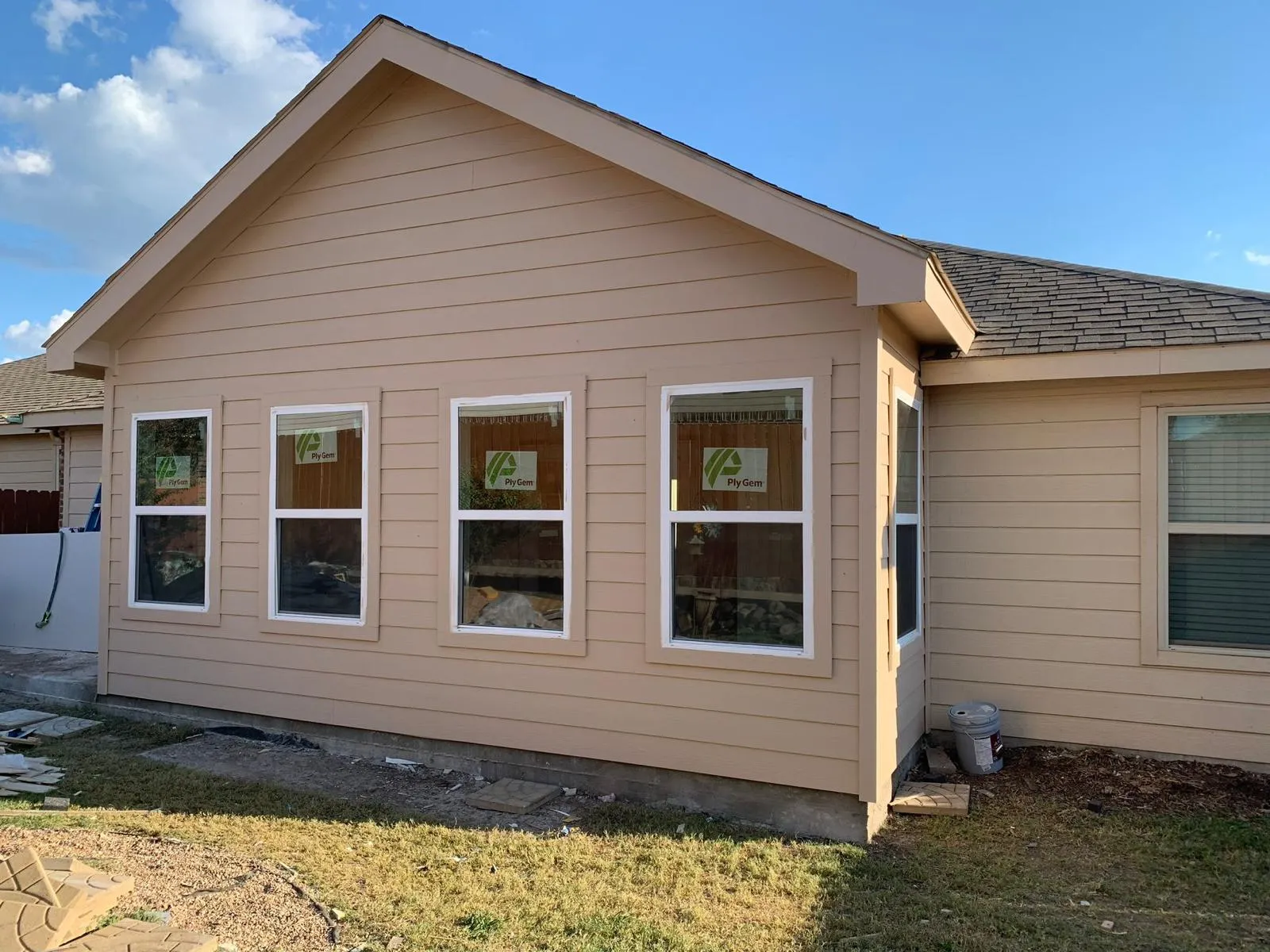
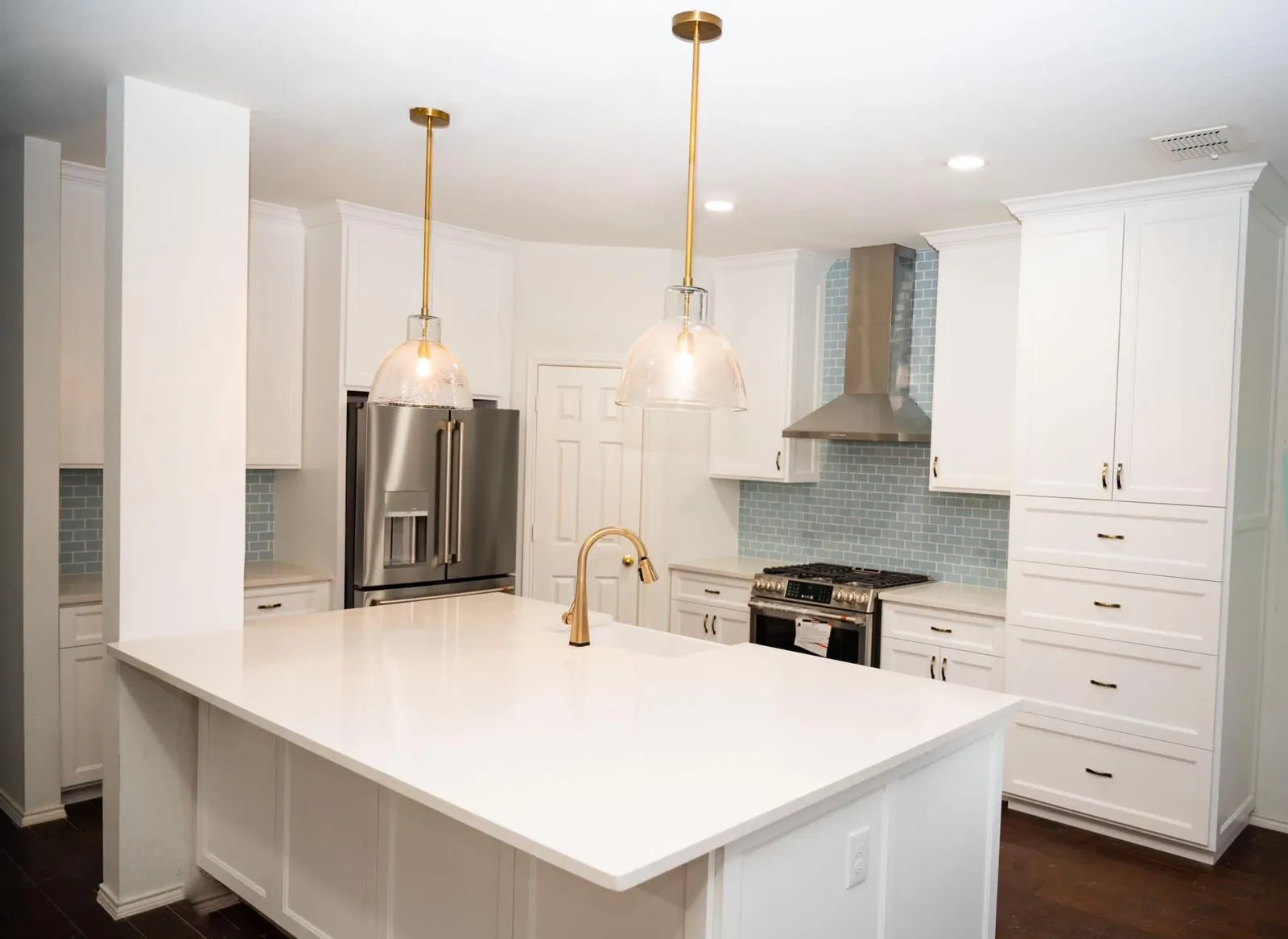

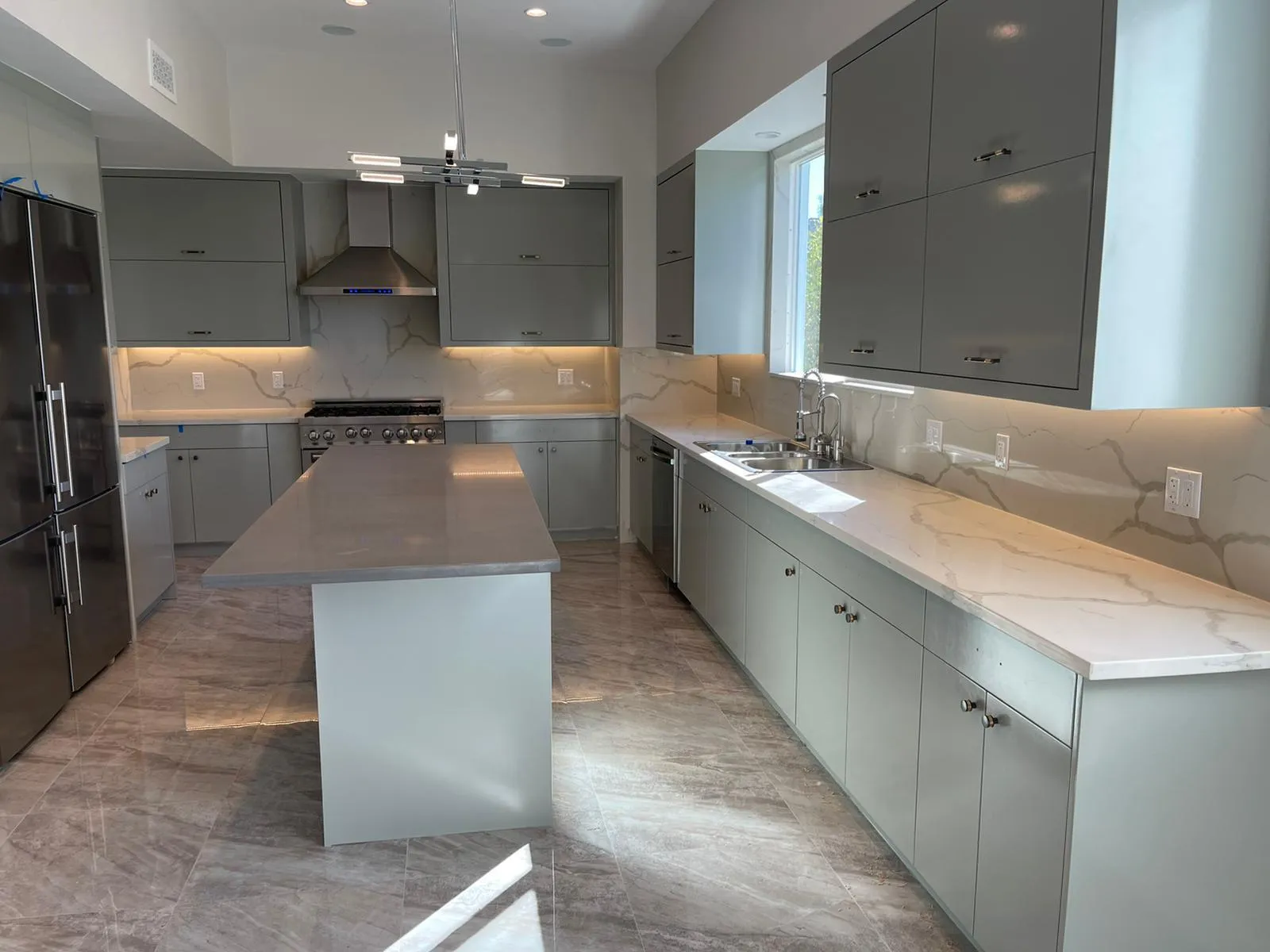
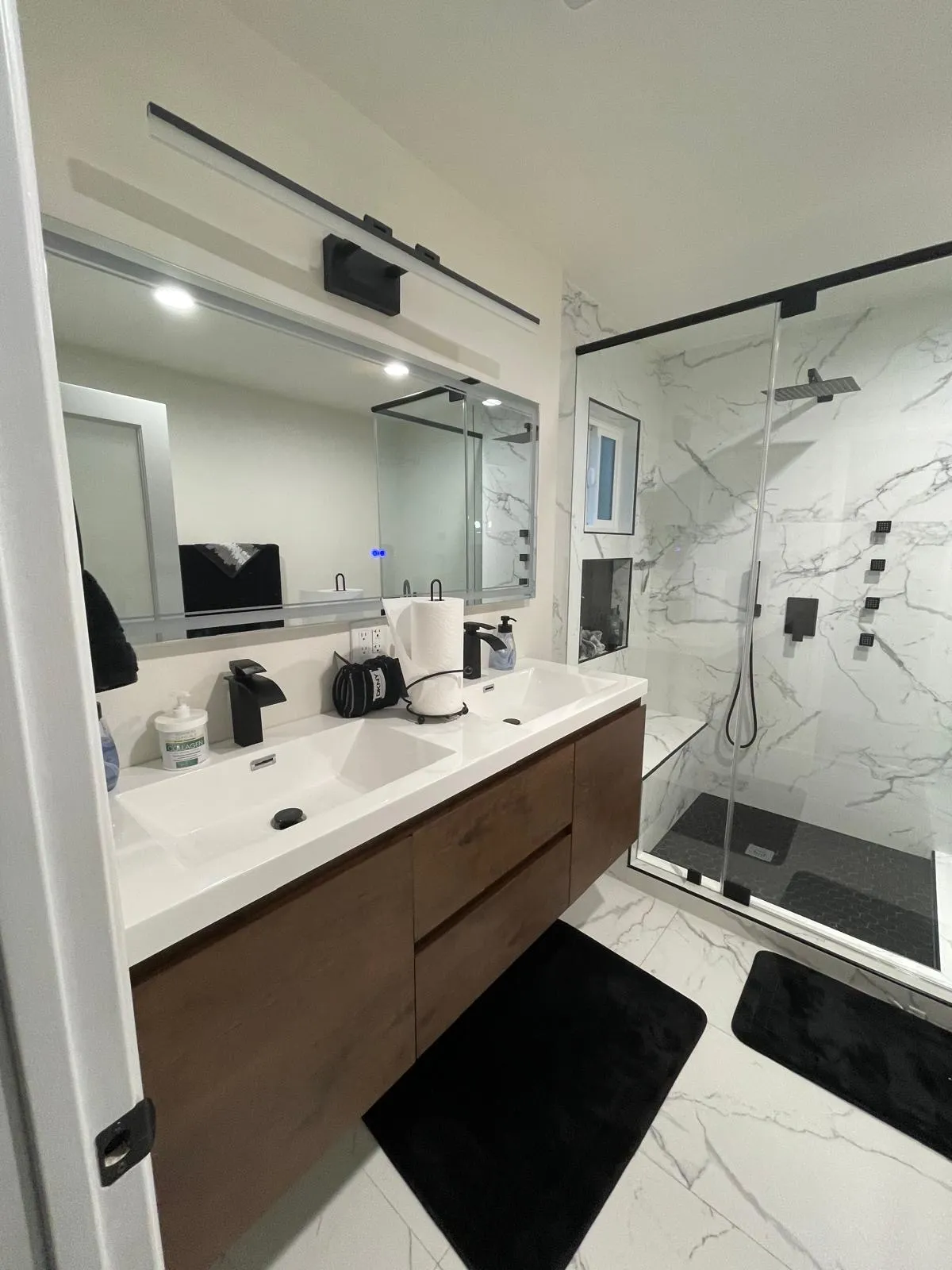

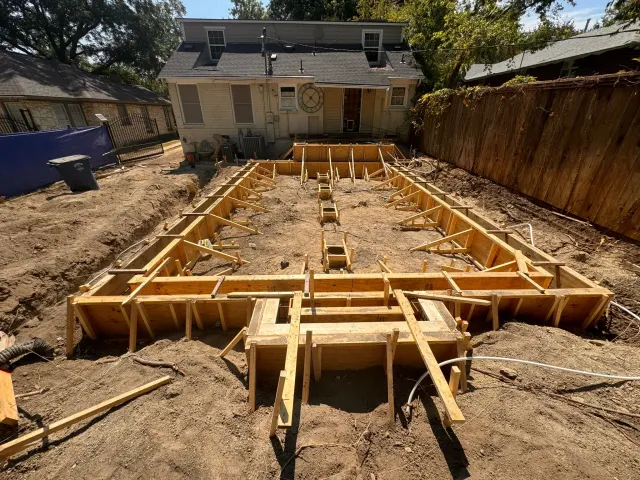
NRG Remodeling does foundation repair in Dallas, and in Arlington and Grapevine too. Much of Dallas County sits on clay that swells when wet and shrinks when dry, so houses here can move unevenly. Whoever you hire, a sound repair starts with an inspection that measures how the house has moved and finds why, and the repair plan should follow from those findings.
Foundation and drainage reviews from homeowners
Read the full review →“The foundation work was good. We are satisfied from the job. Thank you David & Val”
Read the full review →“Based on a previous project with NRG and project manger David, we hired them to build a retaining wall, for a side of our home that was losing soil and exposing the foundation.”
Read the full review →“We contracted with NRG to install a French drain to solve a drainage problem in our yard. That decision was based on our interactions with David, our project manager.”
Read the full review →“Lir and Rubi were amazing they took a time to explain me about the project and quality was amazing they installed a new floors in the kitchen and they also repaired my foundation the”
Why do Dallas foundations move?
The 1980 USDA soil survey of Dallas County places the county in the Blackland Prairie, a region of "dark, thick, plastic clay soils". In the eastern part, the predominant soil on the Taylor Marl is "the black, waxy Houston Black clay"; in the western part, the most common soils formed from the Eagle Ford Shale are "the olive Vertel clays and, to a lesser extent, the dark brown Heiden clays". The survey gives all of them high shrink-swell potential.
Old river terraces with soils from sandy to clayey cover more than 30 percent of the county, so the soil under your own house decides how much of this applies.
The USDA series description of Houston Black clay adds two facts about how it behaves. In dry periods it opens cracks half an inch to four inches wide, and "water enters the soil rapidly when it is dry and cracked, and very slowly when it is moist."
Put together with how houses sit on it, the practical result is this: after a dry spell, the ground under one side of a house can take on water faster than under another side, and a foundation resting on it can move unevenly. Uneven movement is what tends to show as cracked walls and sticking doors.
Sources: USDA Soil Conservation Service, Soil Survey of Dallas County, Texas (1980), and the USDA Houston Black soil series description.
Slab or pier and beam: how does each one show trouble?
Slab foundations
A slab is a concrete floor poured on the ground, so the house rides on the soil directly beneath it. When part of the slab drops or heaves, the movement can show up above it: cracks in brick and drywall that run from the corners of doors and windows, doors that stop latching, and cracks in tile laid on the slab. The slab itself is usually hidden under flooring, so the walls and doors are the first place to look.
Pier-and-beam foundations
A pier-and-beam house sits on beams carried by piers, with a crawl space under the floor. Trouble shows as floors that slope, bounce or feel soft, and gaps at baseboards. Because the crawl space can be entered, the piers, the beams and the moisture under the house can be looked at directly, which a slab does not allow.
For a fuller checklist of warning signs, read our guide to the signs of foundation problems in Dallas.
What should a foundation inspection tell you?
A repair is only as good as the diagnosis behind it. Before you agree to any repair, the inspection should leave you with clear answers to these points:
- How much the house has moved. Floor elevation readings across the house, so the high and low areas are measured, not guessed.
- Where it is moving. Which walls, doors and corners show it, and whether the cracks look recent or old.
- Why it is moving. Drainage and gutters, how the yard slopes, trees close to the house, and whether a plumbing leak could be wetting the soil.
- What the repair is. The method, how many supports and where, any drainage work, and who designed it.
- What comes after. The repairs to drywall, doors or brick once the foundation work is done, and the permit and inspection the job needs.
A leak under a slab is worth ruling out early, because a leaking line under the slab can wet the clay from below. If a plumber is needed first, hire a licensed plumber to test the line before the foundation work.
Which repair methods will you see in a bid?
Bids use their own vocabulary. These are the terms you are most likely to read, so you can compare one bid with another; which one fits your house is a question the inspection answers.
- Piers under a slab. Supports installed below the slab down to firmer ground, then used to carry or lift the low areas. Bids differ in the pier type, how deep they go and how many are placed.
- Pier-and-beam adjustment. Shimming, replacing or adding piers in the crawl space, and repairing or replacing damaged beams or sills.
- Drainage corrections. Gutters and downspouts that discharge away from the house, regrading so the yard slopes away from the foundation, and drains where water collects.
- Retaining walls. Where soil is washing away from the side of a house and exposing the foundation.
Some of the homeowners in the Google reviews near the top of this page hired NRG for this kind of drainage and soil work: a French drain for a drainage problem, and a retaining wall for a side of the house that was losing soil.
How do you keep the soil even after a repair?
Because the clay moves with moisture, keep the soil around the house as evenly moist as the seasons allow: gutters that carry water away, ground that slopes away from the walls, and the soil along the foundation watered in long dry spells.
Watering a foundation under Dallas water rules: sprinklers and automatic systems may run only on your designated watering day, but the city code lists watering a foundation with a hand-held hose, a drip irrigation device, a soaker hose or a bucket as a defense under that rule, so the day limit does not stop it. A separate rule bans watering lawns and landscapes between 10 a.m. and 6 p.m. on any day, so water early or late (Dallas City Code Sec. 49-21.1, as published July 2026).
What drives the cost of foundation repair
A price before the inspection is a guess. These are the parts that set it:
- How far the house has moved, and where. The number and placement of supports follow the measured low areas.
- Slab or pier and beam. A slab has no crawl space to work from, while a pier-and-beam crawl space can usually be entered.
- Access. Flowerbeds, patios, driveways or interior floors that have to be opened and put back.
- Drainage work. Gutters, regrading or drains that remove the cause along with the symptom.
- Plumbing. A leak under the slab, when there is one, needs a licensed plumber to test and repair it first.
- Repairs after the lift. Drywall, trim, doors and brick that cracked while the house was moving.
- Engineering and permit. Any engineer's report the repair needs, and the city permit.
Ask about financing through our partners when you book the free estimate.
Questions to ask a foundation repair company in Dallas
The inspection list above covers the diagnosis. Before you sign, three more questions settle the paperwork:
- Who applies for the permit and is there for the inspection? Get the answer in the written scope.
- Is the engineer's report, if there is one, yours to keep? A copy helps when you sell or when the house is checked again later.
- What is written down about the work afterwards? Ask what any warranty covers, for how long, and whether it transfers to a buyer if you sell.
Foundation repair questions
Do I need a permit for foundation repair in Dallas?
Yes, in the city of Dallas. The building code requires a permit to repair or alter a structure, and foundation repair is one of the permits the city's Building Inspection district offices can issue, not only the main permit center.
What should I do first when a door starts sticking?
Write down which doors and windows stick and since when, look for new cracks around them, and have the floor levels measured before anyone proposes a repair. Measurements, not a single symptom, should decide the plan.
Should I repair the foundation before a remodel?
Yes, if the house is moving. New tile, drywall and cabinets need a stable structure under them, so the foundation work and the repairs it brings come first and the new finishes after.
Have your foundation looked at
Tell us what you are seeing: the cracks, the doors that stick, the floors that slope, and whether the house is on a slab or pier and beam. We are rated 4.9 on Google. If you are planning an addition on top of a foundation repair, our home additions page explains how a new foundation is tied to an old one; for new finishes once the house is stable, see whole home remodeling.