



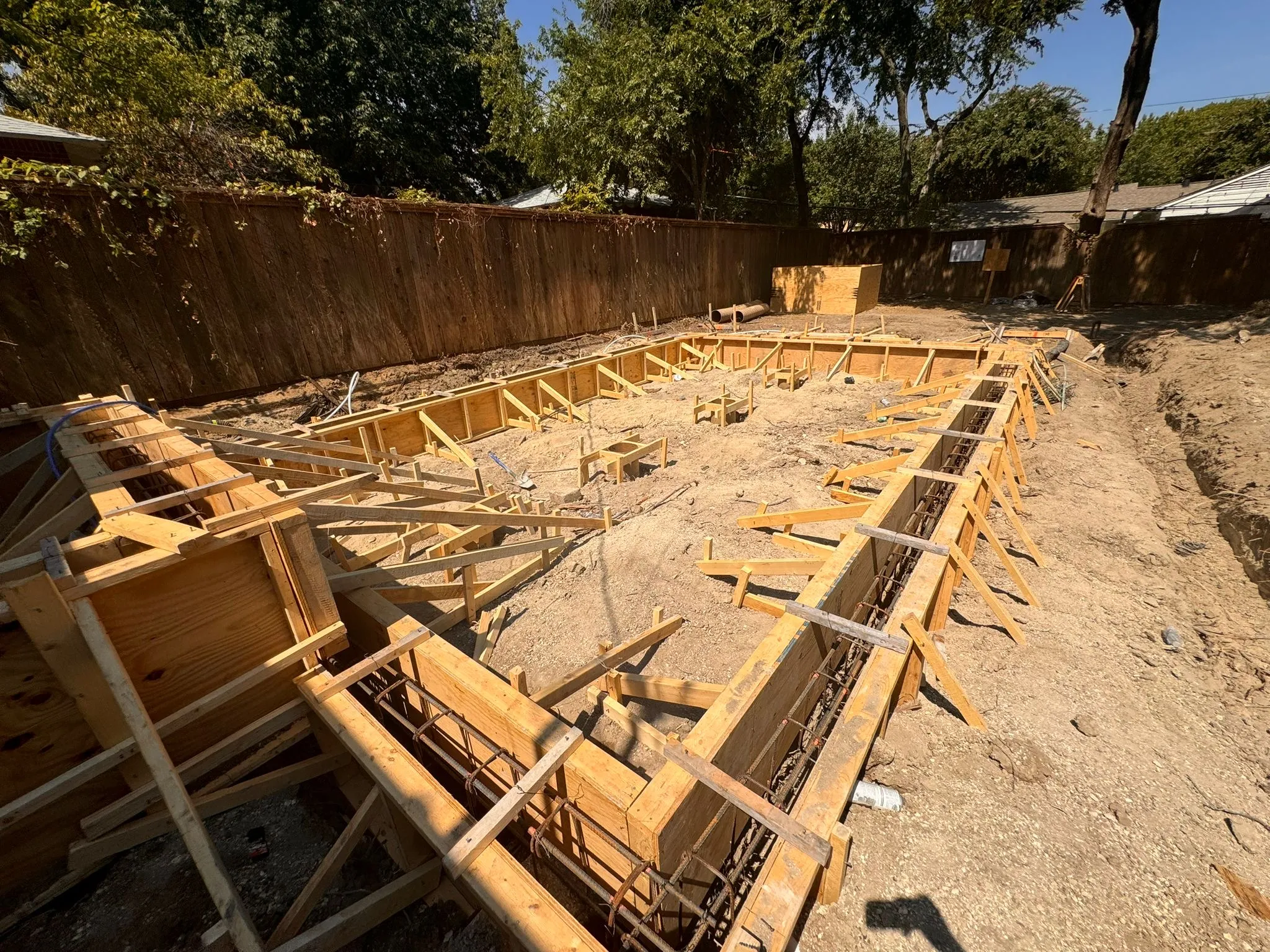
The signs of foundation problems in a Dallas home are diagonal cracks running from the corners of doors and windows, doors that stick or will not latch, gaps where walls meet ceilings or trim, sloping floors and stair-step cracks in brick. A common cause in this area is expansive clay soil, which swells when it is wet and shrinks when it dries.
One sign on its own is often nothing. Several in the same part of the house, or one that keeps growing, is worth a closer look.
Foundation problem signs inside and outside the house
The list builds on the indications Texas home inspectors report under the Texas Real Estate Commission's standards of practice (binding or out-of-square doors, framing and frieze board separations, sloping floors, cracks in walls, floors and ceilings, and cracking or rotating brick), grouped by where you will notice them.
Inside
- Doors that bind, swing on their own, will not latch, or show a wedge-shaped gap at the top
- Drywall cracks running diagonally from the corners of doors and windows
- Cracks or separations where walls meet the ceiling, or between trim and the wall
- Floors that slope or dip, and floor tile cracked in a line
- Windows that stick or will not lock
Outside
- Stair-step cracks in brick, or brick that bulges, leans or rotates
- Gaps between the brick and window or door frames
- Trim at the top of the brick (the frieze board) pulling away
- Cracks in the exposed edge of the slab, or rebar showing
- Soil pulling away from the foundation, water pooling against it, a leaning retaining wall nearby
Why they show up where they do: a house frame is built square. When one part of the foundation rises or drops, the openings in the walls (doors and windows) are pushed out of square first, so the cracks start at their corners and the doors stop closing properly. Brick is stiff and cannot bend, so it cracks along its mortar joints in steps.
Foundation Repair
When foundation signs need a closer look.
Home Additions
More room attached to the house.
ADUs
A separate backyard unit.
Why Dallas clay soil moves
The Texas Water Development Board describes the Blackland Prairie, a belt of clay soils, as running from north of Dallas south to San Antonio. Houston Black, the official Texas state soil, covers about 1.5 million acres of it and is made of highly expansive clays that shrink and swell markedly as their moisture changes; the Board notes that in metropolitan areas this very high shrink-swell potential is a limitation for building. Houston Black is one soil series among several in the region, and the soil under any one lot varies.
The USDA's description of the Houston Black series gives a sense of the scale: in dry periods it cracks open in gaps from about half an inch to 4 inches wide, reaching a foot or more deep, and in most years those cracks stay open for 90 to 150 days in total. Water runs into the soil quickly while it is dry and cracked, and very slowly once it is wet.
A slab or a row of piers rests on that soil. When the ground under one side of a house dries out more than the other (a large tree drawing water, a bed that never gets watered, a downspout soaking one corner), the clay moves unevenly and the house moves with it. That is why signs can come and go with the seasons, opening in a dry summer and partly closing after a wet spring.
Slab or pier and beam: how the signs differ
Two foundation types are common in Dallas-area houses, and the type changes where you look.
Concrete slab
The house sits on a reinforced concrete slab poured on the ground. Movement shows up above it: drywall cracks, doors, brick, and floor tile cracking in a line. Cracks in the slab itself are usually hidden under flooring; check the garage floor and the exposed edge of the slab outside.
Pier and beam
A wood floor frame rests on beams and piers over a crawl space. Look for floors that feel soft, bouncy or sloped, and, from the crawl space, for damaged beams, joists, piers or sills, standing water and poor ventilation, all of which Texas inspectors report as deficiencies.
Normal settling or a foundation problem?
Hairline cracks in drywall or in a slab that appear once and do not change are common as a house and its materials settle. The pattern is what separates settling from a problem:
- Size and change. A crack that widens over months, or is wider at one end than the other, points to movement that is still going on.
- Direction. Diagonal cracks from the corners of openings and stair-step cracks in brick follow the way a frame is pushed out of square.
- Company. Signs that show up together carry weight: a crack by a door that also sticks, near a floor that also slopes.
- Return. A crack that comes back after it was patched and painted is still moving.
To check, mark both ends of a crack in pencil with the date, photograph it next to a ruler, and look again every month or so through a dry season and a wet one. A crack that stays put is usually settling; one that grows, or opens and closes with the weather, usually means the soil is moving.
When to have a foundation looked at
- Several signs in one area. Cracks, a sticking door and a sloping floor on the same side or corner of the house.
- A sign that grows. Any crack your pencil marks show getting longer or wider.
- Brick or trim separating. Gaps opening at window frames, doors or the frieze board.
- Before you buy or sell. A Texas inspector gives a written opinion on how the foundation is performing, and the seller's disclosure notice asks about known defects in the foundation or slab, previous structural repair, and settling or soil movement.
Meanwhile, keep water moving away from the house. Texas inspectors flag drainage that is not performing, grade that does not slope away from the foundation, and gutter and downspout problems, because water standing against one side of a house wets the clay unevenly, and uneven moisture is what moves it unevenly.
What a foundation inspection checks
Under the Texas Real Estate Commission's standards of practice, a home inspector:
- gives a written opinion on how the foundation is performing, and reports its type and where the crawl space (if any) was inspected from;
- reports the visible indications behind that opinion, such as binding or out-of-square doors, framing or frieze board separations, sloping floors, cracks in walls, floors or ceilings, and cracking or rotating brick;
- reports as deficient: deteriorated materials, problems in beams, joists, piers, posts or sills, retaining walls that affect the foundation, exposed or damaged reinforcement, and crawl space ventilation or drainage that is not performing;
- reports drainage around the foundation, grade levels, and gutters and downspouts.
The same rules say what the inspection is not: the inspector does not have to enter a crawl space with less than 18 inches of headroom or an opening smaller than 24 by 18 inches, and the list of indicators is not exhaustive. An inspection tells you whether to dig deeper; a structural engineer or a foundation contractor's evaluation is the next step when the signs point to movement.
If the signs point to repair
NRG Remodeling repairs foundations and has built the drainage fixes that often go with them, such as French drains and retaining walls, for homes in Dallas, Arlington, Grapevine and nearby Dallas-Fort Worth towns. We start with a no-obligation consultation and estimate. Repair options and how the work is done are on our foundation repair Dallas page, and finished work is in our selected projects.
"we hired them to build a retaining wall, for a side of our home that was losing soil and exposing the foundation."
linda M., Google review
What homeowners say about NRG foundation and drainage work
Read the full review →“The foundation work was good. We are satisfied from the job. Thank you David & Val”
Read the full review →“Based on a previous project with NRG and project manger David, we hired them to build a retaining wall, for a side of our home that was losing soil and exposing the foundation.”
Read the full review →“We contracted with NRG to install a French drain to solve a drainage problem in our yard. That decision was based on our interactions with David, our project manager.”
Read the full review →“Lir and Rubi were amazing they took a time to explain me about the project and quality was amazing they installed a new floors in the kitchen and they also repaired my foundation the”
Sources: Texas Water Development Board, "Texas State Soil: Houston Black"; USDA Natural Resources Conservation Service, Official Soil Series Description, Houston Black; Texas Real Estate Commission, 22 TAC 535.228 (inspection standards for foundations, grading and drainage); TREC Seller's Disclosure Notice (form OP-H).
Seeing more than one of these signs in the same part of the house: call NRG Remodeling at 214-810-6785 or request an estimate online to have the foundation looked at.